
 MMA.ORG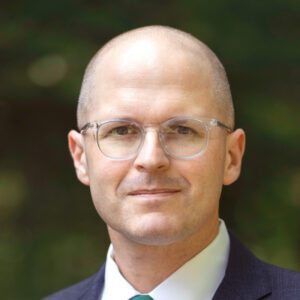
Adam Chapdelaine
Annual Report to the Members
Submitted by MMA Executive Director & CEO Adam Chapdelaine, January 2026
I am so excited to welcome you to a second straight record-setting Connect 351! It is amazing to have so many of us gathered in one place to celebrate the work of local government in Massachusetts — and to learn, grow, and be re-energized. We want to welcome over 300 first-time attendees!
This year, I want to start by acknowledging that you are living and working in times of uncertainty, upheaval, and change. You are not in a “new normal” — you are in between a historic normal and a yet-to-be realized, new and future normal.
I do not know what the future holds. But I do know that these times have made your jobs in local government more challenging — more challenging in terms of community trust, more challenging in terms of balancing your budgets, and more challenging in terms of meeting the needs of your residents.
I also know that making the time to come to this conference, in the face of these challenges, is no small feat. For that, I am deeply, deeply grateful.
I know that, in these times, the work of local government has never been more important. As the residents of the Commonwealth wake up every day to read the news, they are left wondering who they can trust and who they can rely on. And the reality is, they can trust you and your cities and towns. You and your teams work to ensure that the foundational, quality-of-life services provided by local government are provided consistently and professionally. And more recently, many of your residents have turned to you, as you have stepped up, and opened your doors to them as they have been left wondering whether they might still be served by the federal government.
It’s within this context that the MMA views its duty to all of you as our members. Last year, I told you all that our “why” and our “cause of action” was you. It was true then and it remains just as true today.
The whole team at the MMA and MIIA are dedicated to helping you succeed as a local government official. Over the past year, we’ve been busy working to provide the MMA offerings that you have come to know and love, but we have also been working to innovate and adapt so that we can offer you timely trainings, the most relevant communications, and advocacy that matches up with the on-the-ground conditions that you all face every day.
To name a few of these key efforts, our Administration and Finance team, led by Katie McCue, has worked this year to develop a third location for the 2026 Suffolk Certificate Program — expanding our geographic reach and allowing for more local government staff to access this best-in-class educational and professional development opportunity. Our Chief Equity Officer, Jill Harvey, has organized a whole new array of accessibility offerings for this conference, along with organizing a range of affinity group meetings for this event, to help you all connect more deeply with your peers.
Our Legislative Division, led by Dave Koffman, played a central role in the successful passage of several bills, most notably a historic increase in Chapter 90 funding. Our Communications Division, headed up by John Ouellette, last month launched the MMA’s first-ever podcast — The 351 — which already has more than 800 downloads across all platforms. And our Membership Division, led by Jackie Lavender Bird, helped our new affiliate group, the Massachusetts Municipal Communicators, hold its first in-person meeting in 2025, and will be launching a new webinar series focused on AI in local government starting next month.
I also want to recognize the team at MIIA, led by Stan Corcoran, who continue to be committed supporters of the work of the MMA, but also amazing partners to the hundreds of cities and towns that benefit from MIIA’s wide array of offerings.
It is my hope that some or all of these efforts have had a direct and meaningful impact on you and the work that you do each day.
The other big effort that we at the MMA have put forth over the course of the past year, and the one that I want to spend the remainder of my time discussing, is the municipal finance analysis that we conducted, which resulted in the release of two reports last fall: “A Perfect Storm” and “Navigating the Storm.”
If I can be candid for a moment, we went all-out on this project. It was a cross-team effort that many people from the organization played a role in. And you know what, I think people took notice. We have been covered in over 80 news reports, and I am absolutely confident that this effort has caught the attention of state leaders.
But while I have your attention, I’d love to provide a brief recap of the findings and the recommendations coming out of these reports.
For a long time, most of you have been doing more with less. You have been balancing the books by constraining services and asking more of your local taxpayers, trying to hold back a tide that has been rising for over a decade.
In October, we put a name to this struggle. We released the first report: “A Perfect Storm.” It wasn’t just a collection of data; it was a documentation of the “fiscal breaking point” you all feel every single day. The data confirmed what we thought:
The Funding Gap: While state spending has grown to meet critical needs, on an inflation-adjusted basis local spending growth has been throttled at just 0.6% — a fraction of the national average.
The Erosion of State Aid: Despite recent investments by the Commonwealth, adjusted for inflation, our Unrestricted General Government Aid, or UGGA, is dramatically lower than it was two decades ago.
The Constraints: You are locked in by Proposition 2½, barred from local revenue diversity, and you’re watching three out of four of our communities come up against their levy limits. We aren’t just facing a rainy day; this is structural. When you cut, you aren’t cutting fat anymore. You’re cutting bone.
Now, let’s be honest about the space we’re in. We are not shouting into a void. We know that our partners at the State House — Gov. Healey, the House speaker and the Senate president — are facing their own gloomy weather forecast. We recognize that the state is navigating a period of slow revenue growth and shifting federal landscape. We see the pressure of rising health care costs and the exhaustion of pandemic-era reserves.
But here is the truth we must carry to Beacon Hill: The state’s competitiveness and success depends on the fiscal health of its cities and towns. When municipal budgets fail, the state’s foundation cracks. We aren’t asking for the state to solve our problems for us; we’re asking for the tools to solve them together.
This is why we released the follow-up report: “Navigating the Storm.” This isn’t a wish list — it is a blueprint for a renewed partnership that acknowledges the state’s tight margins while demanding a sustainable path forward. Here is the focus of our path forward:
351 for 351: This is our priority. We are calling for a $351 million infusion into UGGA. This funding amount would mean that your UGGA allocation would increase by 26.5%! We know the state budget is tight, but this is a priority investment that looks at historic funding levels and targets where we were before the Great Recession. It’s about restoring the state-local partnership to a level that allows you to survive the current economic headwinds. Now is the time to start making progress toward this goal.
Flexibility and Empowerment: You need the tools to help yourselves. We are advocating for the Municipal Empowerment Act, for the ability to adjust local-option taxes on meals and lodging, and for a modern approach to Proposition 2½ that would allow for gradual, multi-year overrides or adjustments tied to the actual cost of living.
Stability for Education: We must ensure that Chapter 70 aid, the special education circuit breaker, rural school aid and other key accounts are fully funded and protected.
A “Perfect Storm” was about the challenges that threaten to pull you under. “Navigating the Storm” is about charting a course to fiscal sustainability that is both durable and equitable. (To read the reports, please visit mma.org.)
As local leaders, you are the most resilient, creative, and dedicated group of people I know. You have navigated your communities through a global pandemic, through economic shifts, and through the daily pressures of local governance.
Now, we must speak with one voice. We must tell our partners at the State House that you understand their challenges, because you live them every day. But we must also insist: A stronger Massachusetts starts at the local level.
Thank you for everything you do. Now, let’s go make our case.