

Home

New Swampscott high school to house senior center

Attention: open in a new window. PrintE-mail

August 31, 2005


From The Beacon, Mass Innovations, September 2005

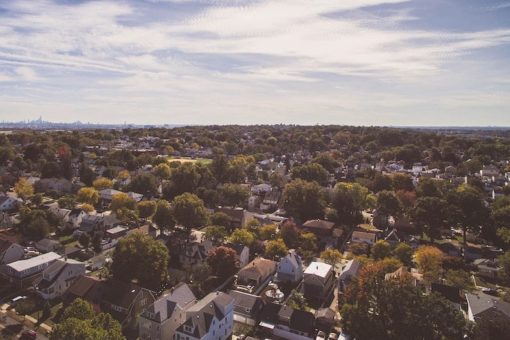
How does a town with almost no open space make room for a new senior center? In Swampscott, with a population of 14,500 in just three square miles, the answer was to incorporate a senior center into the design for a new high school, scheduled to open two years from now.

“One of the overarching purposes of the [high school] project was to make it a civic facility,” says Joe Markarian, chair of Swampscott’s School Building Authority. Markarian, noting that many seniors on fixed-incomes were opposed to the building of the new school, adds, “This way they’re getting a return on their investment.”

Swampscott’s current senior center is located in a converted three-story home built in the 1870s. Because only the first floor is handicapped-accessible, the other two floors are used primarily for administrative purposes. The tight quarters, according to Executive Director Mary Marcou, means that there is little space for educational or recreational activities, and blood-pressure testing takes place in the lunchroom.

At the new high school, the senior center will occupy 6,500 square feet on the ground floor of the building.
While town officials hope that students and seniors will benefit from mutual contact, “that doesn’t mean they’ll be sharing the corridors,” Markarian says. The senior center will be at the opposite end of the school from the classrooms, and will have its own entrance and parking area. Seniors also will have access to other school facilities or equipment, including the gym, weight room, a pottery kiln, and computers, though not at the same time as students.

Swampscott officials had hoped that including community space within the school would result in the state reimbursing a higher proportion of the school’s costs, but this did not turn out to be the case. Town Administrator Andrew Maylor says, however, that the prospect of the extra money spurred officials to think creatively about the community’s needs.

“We wouldn’t ever have been able to build a senior center if it weren’t for this project,” Maylor says. “We wouldn’t have been able to afford to build a building or to acquire the land to build it on.”

When voters approved the financing of the school construction in late 2002, plans called for setting aside 2,000 square feet for “senior space,” an amount roughly equivalent to what the center has at its current location. When it became clear that the proposed space was inadequate, a much larger area was incorporated into the school’s design.

Meanwhile, school officials also agreed to expand plans for a gymnasium on the floor above the senior center into a larger “field house” with four basketball courts. The two expanded projects increased the overall cost of the school by $2.1 million; town officials this spring were required to seek public approval for a Proposition 2 1/2 debt exclusion to fund the cost.

Both senior center supporters and advocates for the larger gymnasium expressed concern that their particular project could lose, so the two proposals were presented as a single ballot measure to consolidate support.

The measure passed handily on April 26, and Swampscott broke ground on the $55 million project less than two weeks later.

“I think that the community really understood that if you’re going to build a building, you do it once and you do it right,” Maylor says. “And that if you’re able to fulfill multiple community purposes – hey, that’s great.”

This monthly column highlights some of the innovative approaches and strategies Massachusetts municipalities are using to deliver services and solve problems. If you know of a Mass Innovation that could be featured in this column, contact the MMA (phone: (800) 882-1498; fax: (617) 695-1314).