Who is a member?
Our members are the local governments of Massachusetts and their elected and appointed leadership.


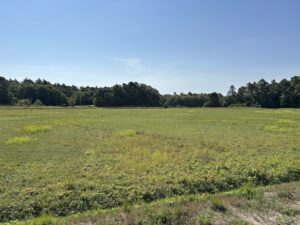
The town of Plymouth is in the process of buying this former cranberry bog property to restore it to wetlands. (Photo courtesy Nate Cristofori/town of Plymouth)
With a new state grant and Town Meeting’s backing, Plymouth is continuing efforts to reclaim its natural habitats, one retired cranberry bog at a time.
This fall, Plymouth received a $348,000 Local Acquisitions for Natural Diversity grant toward the purchase of a 20.8-acre piece of land containing roughly 11 acres of cranberry bogs. The town, which has been buying and restoring old cranberry bogs to wetlands for almost two decades, is hoping this newest project will improve water quality and the local habitat, while also expanding recreational trail access in the area.
Restoring these former bogs to wetlands also helps return a greater diversity of insects, fish and wildlife to the parcel, said David Gould, Plymouth’s director of energy and environment.
“I think that [residents] have seen us do four or five large-scale cranberry bog restorations already, and they’ve seen the tremendous benefit of bringing these wetlands back to naturally occurring wetlands as conservation areas, where people can also recreate,” Gould said. “They can see the difference in fish and wildlife habitat. And I think because people have seen those over years, they really did support this proposed acquisition as well.”
Cranberries are an iconic Massachusetts industry, the official state berry, and a staple of Thanksgiving dinner, but cranberry farming poses challenges to the environment. The process involves creating a monoculture — one kind of plant, providing only one kind of habitat, for a limited number of species, Gould said. In addition, herbicides, pesticides and fertilizers are discharged into the surrounding land and nearby waterways, he said, and the farming disrupts fish passage for species including river herring and American eel.
Plymouth’s LAND grant is part of a state program that supports the efforts of conservation commissions to protect natural land. On Oct. 27, the state announced the award among more than $12 million in grants given through LAND and another program, Parkland Acquisitions and Renovations for Communities.
“These projects support local economies, improve public health and make our neighborhoods better places to live,” Gov. Maura Healey said in a statement about the grants. “This funding helps ensure that every resident has access to the benefits of nature.”
The town’s restoration work will improve kayak and canoeing access to Little Island Pond, a popular destination, and expand trail connections from the town’s nearby Beaver Dam Conservation Area.
In October, Town Meeting approved the purchase by a vote of 137-2. The property costs $700,000, and Plymouth is setting aside another $29,000 for closing costs, property signs and other expenses, Gould said. Along with the state grant, the town is using $281,000 in Community Preservation Act funds and $100,000 from Mass Audubon, whose nearby, 481-acre wildlife sanctuary will also benefit from the water-quality improvements.
Gould said the town hopes to close on the property by year’s end. Once the purchase is complete, Gould’s 10-employee Energy and Environment Department will manage and maintain the property.
Though other communities and land trusts are doing this type of restoration work, Gould expressed pride in Plymouth’s almost two-decade track record of purchasing and restoring bogs. He said it’s gratifying to see these properties come back to life as diverse habitats.
“Being able to restore them and see new plants coming back, to see an increase in bird species, to see an increase in fish and wildlife that are using these properties, because we’re creating that natural wetland habitat — for me, that’s the best part about doing it,” he said.