Who is a member?
Our members are the local governments of Massachusetts and their elected and appointed leadership.


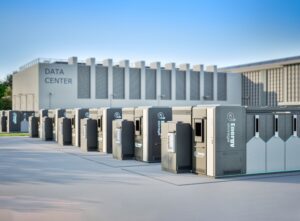 Gov. Maura Healey announced today that her administration will pause accepting data center sales tax exemption applications until stronger protections are in place for Massachusetts residents, businesses and communities.
The administration also released a new framework — a “statement of expectations for responsible data center development and operations in Massachusetts” — to ensure that projects do not drive up energy costs, strain local infrastructure, or harm public health and the environment.
The framework outlines clear compliance expectations for data center developers, including that they must fund the full cost of the energy infrastructure and clean energy supply needed to support the project; protect the surrounding environment, water systems, and public health and safety; and ensure that local businesses and residents can benefit from job creation and other investments.
“Data centers can support innovation and economic growth,” the governor said in a prepared statement, “but if developers want to build in Massachusetts, they need to first demonstrate that they can do so without driving up costs or harming our communities.”
Lt. Gov. Kim Driscoll added that developers “should be prepared to work with our communities and deliver real assurances to their neighbors.”
In 2024, the Legislature created a data center sales and use tax exemption for eligible expenditures incurred during the construction and operation of a qualified data center in Massachusetts. The tax exemption launched last month, but the governor said the Executive Office of Economic Development will pause the acceptance of any applications for new data center projects until guardrails can be put into place.
In developing its framework, the administration said it engaged with community organizations, environmental advocates, labor groups, municipalities, utilities, industry representatives and other stakeholders. The framework is intended to guide future legislative, regulatory and local decision-making related to data center development.
Energy and Environmental Affairs Secretary Rebecca Tepper addressed common concerns about data centers — that they “require enormous amounts of energy and grid infrastructure, back-up power, and water.”
“Our framework lays out how data centers should be developed — bring your own clean energy, keep our air and water clean, and foster good jobs and investment in our communities,” she said. “Adhering to these principles will give developers a strong foundation on which to build relationships with Massachusetts communities.”
New data center framework
The administration’s new framework sets out several categories of expectations for data center development:
• Energy supply and infrastructure: New data centers should supply or directly procure or develop the energy resources needed to support their operations. Projects should not increase costs for existing ratepayers or place additional strain on the electric grid. Projects should prioritize, where feasible, on-site deployment of clean energy resources, including solar, storage, geothermal, and other zero-emission technologies. Developers should also follow industry best practices for energy efficiency and infrastructure planning.
• Water use and infrastructure protection: Data centers should be located only where sufficient water supplies, wastewater, and infrastructure capacity exist, and should provide infrastructure upgrades when necessary. Projects should implement water-efficient cooling technologies and wastewater reuse strategies, including closed-loop systems, where feasible. Water discharges from data centers should not endanger public health or the environment. During drought conditions, usage restrictions should prioritize existing users.
• Air quality and public health: Data centers should minimize air emissions, noise and other impacts on communities. Developers should pursue alternatives to diesel backup generation whenever feasible and implement measures to protect public health.
• Labor and jobs: Projects receiving public incentives should support high-quality jobs, workforce training opportunities, and workforce benefits for Massachusetts residents, including project labor agreements or labor peace agreements.
• Community benefits and engagement: Communities should have a meaningful role in project planning and development. Developers should ensure robust community engagement and communications with residents, including community benefits plans and agreements, using tools developed by the state as part of its new energy siting and permitting rules.
According to the language of the framework, it “is intended to provide clarity for data center developers considering projects in Massachusetts on responsible practices, and explicit expectations for those seeking the sales and use tax exemption.”
The framework states that it will be used to guide: executive agencies and municipalities evaluating data center proposals; discussions of executive agencies with the Legislature, municipalities, and others on data center policy; and actions by the Department of Public Utilities within its existing authority.
The framework states that it “supplements, and does not replace, existing state and local siting, permitting, and regulatory requirements.” These include Energy Facilities Siting Board requirements for onsite generation, Massachusetts Environmental Policy Act review, Massachusetts Water Management Act requirements, and local zoning, building, traffic and noise requirements.