Who is a member?
Our members are the local governments of Massachusetts and their elected and appointed leadership.

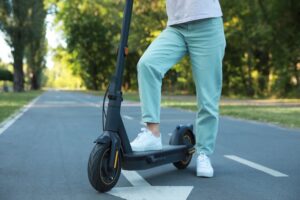 A Special Commission on Micromobility on Jan. 31 filed its final report with the Legislature, making a range of recommendations aimed at improving micromobility regulation, safety, and infrastructure across the state.
The special commission was established by a 2024 economic development law known as the Mass Leads Act, which directed the commission to:
• Review state and local laws and regulations for micromobility vehicles (such as motorized bikes, scooters, skateboards and other vehicles)
• Make recommendations to regulate micromobility vehicles, including on bike paths, sidewalks and shared use paths
• Make recommendations to support the expansion of micromobility vehicle use and innovation
The commission’s report addresses the following categories:
• Legislative and regulatory changes: Recommends adding legal definitions to state law and updating or removing outdated definitions related to micromobility devices
• Speed classifications: Recommends adopting a classification framework for micromobility devices based on speed, including requirements for operation, guidance on where devices may be used, and methods to identify different device types
• Micro ID: Recommends the establishment of a working group to design a statewide Micro ID Decal pilot program to link devices to a record confirming their classification tier
• Police training: Recommends that the State Police Academy and the Police Training Committee develop and deliver training for law enforcement on current and new micromobility laws, regulations, and guidelines
• Crash report and vulnerable user data: Recommends the amendment of state law to allow micromobility-related crashes to be included in the Massachusetts Department of Transportation’s crash data system, which currently does not track incidents that do not involve a motor vehicle
• Default maximum speed on paths: Recommends establishing a statewide default maximum speed of 20 MPH on shared use paths, with municipalities or other path-operating entities retaining authority to lower the speed limit based on local conditions
• Education: Encourages law enforcement to collaborate with local partners, including Safe Routes to School, to educate micromobility users about safety practices and applicable laws
• Automated enforcement: Recommends legislation to authorize automated traffic safety enforcement on infractions that impact vulnerable users
• Model ordinance: Recommends that MassDOT include model micromobility traffic control regulations and provisions prohibiting obstruction of bicycle lanes in its Sample Regulation for a Standard Municipal Traffic Code
• Design guidance: Recommends that MassDOT and the Department of Conservation and Recreation develop a design guide for state and municipal trails and shared-use paths with recommended infrastructure standards
• Transit integration: Recommends that the MBTA and other regional transit authorities develop plans to better integrate micromobility options into transit systems
• Funding for upgrades: Recommends increased appropriations for existing programs that support municipal micromobility infrastructure and network expansion
• Bikeshare expansion: Recommends establishing a reliable and sustainable funding source to support publicly owned, docked micromobility share systems
• More e-bike subsidies: Recommends additional funding for the statewide e-bike rebate program
• Commercial use study: Recommends the allocation of funding for MassDOT to partner with an academic institution to study the use of micromobility devices in commercial settings, such as food delivery
• Presumed liability study: Recommends that MassDOT work with an academic partner to study the hierarchy of responsibility in a crash, and the potential effects of introducing a “presumed liability” law
The 15-member special commission included two MMA representatives, along with representatives from MassDOT, the Executive Office of Public Safety and Security, the Department of Conservation and Recreation, the Legislature, law enforcement, and the electric bike and scooter industries.
The report is a result of five public meetings held during 2025.