Who is a member?
Our members are the local governments of Massachusetts and their elected and appointed leadership.


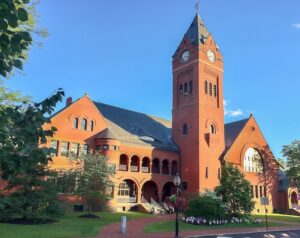
In recent months, the town of Winchester has launched a survey and held listening sessions to understand the public sentiment behind a recent override defeat.
As Winchester, like many municipalities in Massachusetts, faces rising costs and revenue constraints, town officials launched citizen engagement efforts to better understand what was behind a recent Proposition 2½ override loss and to consider next steps.
On March 21, Winchester residents defeated an $11.5 million override — $9 million for operations and $2.5 million for capital stabilization — by about 300 votes. The defeat broke a streak of seven successful Proposition 2½ requests since 2017 for debt exclusions, capital stabilization, and an operating override.
Afterward, the town launched a survey and hosted three listening sessions to gather resident input. Town officials said they hoped the conversations would inform how they structure future financial requests and build the messaging around them.
“I’m a consultant by profession, and one thing I’ve learned in my 30-plus years is, you can’t solve the problem unless you understand why,” said Select Board Member Michelle Prior, who was the board’s chair at the time of the election. “You can’t expect to just roll it forward and ask again, without understanding what went wrong with what you just did.”
After the election, Winchester had to close a fiscal 2027 budget gap, which involved using $3.5 million from free cash and eliminating more than 30 full-time-equivalent school positions, according to Anthea Brady, the current Select Board chair.
The survey and listening sessions sought to understand how the pre-election messaging affected voters’ decisions.
“What did and what didn’t people hear?,” Brady said. “What have we communicated that maybe didn’t reach them, or they didn’t quite like? Or we didn’t communicate in a way that they got?”
The town sought feedback about residents’ awareness of, and participation in, the election; their sources of information regarding town finances; additional information they would have wanted; their views on timing considerations, the efficacy of the messaging, and the override amount itself; their reasons for voting in support or against the override; and their preferences in ballot question structure.
Winchester received 256 survey responses, and about 40 people attended listening sessions in June. Of the 256 survey respondents, 244 said they were aware of the election, and 225 of them voted.
Override supporters emphasized a desire to maintain school and municipal services, while those who voted against it cited affordability issues, concerns about school-related costs, and questions about whether Winchester had exhausted all other efficiencies first.
Respondents offered mixed feedback about preferred ballot question formats, but in general, people wanted more information earlier, and in plain, factual language that spelled out the bottom-line consequences of each possible outcome.
Winchester’s State of the Town Committee mounted a year-long public preparation effort, but the $11.5 million figure didn’t emerge until five or six weeks before the election, Brady said, suggesting that town officials needed a longer runway to explain the amount and the implications.
Prior said the feedback suggested that the override’s proponents needed to engage more with residents who had questions or doubts, including growing worries about their own economic prospects. Visits to the food pantry were rising before the election, Prior said, and more scholarship funds were being sought to help families access preschool and afterschool care.
“We were using things like, ‘Oh, it’s only, you know, 100 bucks a month,” Prior said. “I mean, saying it’s like a cup of coffee (per day) isn’t really going to fly if people are concerned about job stability, or they’re paying for college, or they’ve just retired.”
In advice for other communities, Brady and Prior recommended messaging the need as early as possible; using clear, factual language to describe the impacts of different votes; having a go-to website or forum for information; and engaging with all constituencies and viewpoints.
Town leaders haven’t yet decided on pursuing another override request, but they’re starting a long-range financial planning committee to examine Winchester’s financial needs.
Better messaging alone won’t make the financial challenges disappear, they noted. Rising financial pressures, including health insurance spikes, general inflation, energy costs and other expenses, mean costs are outpacing the revenue-raising capacity of Proposition 2½.
“So I think at this point in time it’s causing a lot of challenges, and probably a number of other communities in Massachusetts are seeing those same things, right?” Brady said. “It’s not just us.’”