Who is a member?
Our members are the local governments of Massachusetts and their elected and appointed leadership.


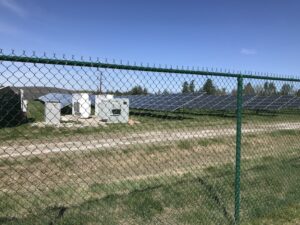
The town of Plainfield is working to update its zoning laws to address solar and battery storage projects. (Photo courtesy Peter Lapointe)
With new state clean energy siting and permitting rules coming this fall, the town of Plainfield is working with graduate students from the Massachusetts Institute of Technology to update its zoning laws, seeking to embrace renewable energy while protecting the town’s agricultural character.
Working with the MIT Renewable Energy Clinic, Plainfield is updating its zoning language with respect to solar and battery energy storage systems. The town, which has no planning staff of its own, said MIT’s involvement is helping it establish community safeguards, while aligning local laws with new state rules taking effect on Oct. 1.
Like many other communities around the state, Plainfield is seeking to balance local concerns about the safety, environmental and aesthetic impacts of the infrastructure, with a desire to comply with state law and embrace a clean energy future. Given the town’s rural, relatively undeveloped landscape, Plainfield and its neighboring communities in western Massachusetts have become an epicenter for developers looking to build solar and battery storage infrastructure.
“I think as a community, we are grasping with our future on many levels — understanding our need to address the bigger picture, while also keeping our focus on our community,” said Peter Lapointe, chair of the Plainfield Planning Board. “And it’s a delicate balance.”
In this small, rural town of about 650 people, every owner of 40-plus acres of property in town has been contacted by multiple developers interested in leasing their properties for installations, Lapointe said. A solar application Plainfield received in November signaled the need for updated zoning, he said.
“So when this landed, and we encountered some pretty fierce resistance,” Lapointe said, “it began to become apparent to us that our bylaw — our current bylaw — was inadequate to be able to give the kinds of guidance that an applicant would need to provide a sensitive application to what our goals and needs are.”
The demand for Plainfield’s undeveloped land coincides with the rolling out of the state’s new clean energy requirements, which seek to expedite the development of clean energy infrastructure across the state.
Under a climate law enacted in November 2024, cities and towns will need to decide on applications for small clean energy infrastructure — including generation projects under 25 megawatts and clean energy infrastructure storage projects under 100 megawatt hours — through a mandated consolidated permitting process within 12 months, or else the projects will be automatically approved. Meanwhile, larger projects will face a state review process.
Municipalities can start accepting the consolidated local permits starting on July 1, but must start doing so by Oct. 1. As a result, many communities are hastily working on zoning changes and updated policies before that deadline.
Amid these changes, the MIT clinic has been helping communities navigate questions and conflicts around clean energy permitting, conducting stakeholder assessments and providing research assistance, public education, and mediation support. Despite the anxiety communities may have around these issues, the new law also presents an opportunity, said Jacob Hall, one of the MIT students working with Plainfield.
“With Massachusetts beginning to implement its new climate act, this serves as an important time for Massachusetts communities to update their renewable energy bylaws in a manner that correctly aligns with their town,” Hall said. “These bylaws are an effective mechanism that can align state climate goals with local needs, values, and capacities.”
The MIT students have been meeting with residents to hear their questions and concerns, and that feedback will help inform the development of community benefits plans and agreements, which would provide resources and protections from permitted clean energy projects. Such priorities could include fire protection needs and public safety resources, emergency preparedness, infrastructure improvements, and environmental monitoring.
Plainfield officials have also been preparing zoning updates to present at Town Meeting on May 30. Among other changes, the updates would increase setbacks for installations, prohibit solar and battery storage projects in the town’s historic village center, add language about battery energy storage systems to limit fire exposure, and require applicants seeking payment-in-lieu-of-taxes arrangements to develop community benefits plans.
Lapointe said he will join planning officials from other communities at a meeting on May 8 with the Hilltown Community Development Corporation to advocate for outside technical assistance to help with applications. Lapointe said he would favor a system that provides communities with outside expertise to review the technical aspects of proposed projects, while the local boards focus on the site plan reviews.
Despite the challenges, Lapointe said he is pleased with his town’s work on the clean energy process.
“We’re ready to do this,” Lapointe said. “We just need to do it in a way that everyone can embrace.”