Who is a member?
Our members are the local governments of Massachusetts and their elected and appointed leadership.
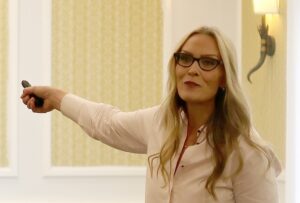
Rachel Shaw, owner of Rachel Shaw Inc., leads a training session on mental health issues and the intersection of discipline and disability during the Massachusetts Municipal Human Resources Labor Relations Seminar on May 7 in Devens.
Employee accommodations, succession planning, and navigating discipline in unionized environments were the main topics of the Massachusetts Municipal Human Resources Labor Relations Seminar on May 7 in Devens.
The seminar opened with a labor law update from attorneys Michael Maccaro and Madison Harris-Parks of Murphy, Hesse, Toomey & Lehane. They covered numerous recent decisions from state courts, the Joint Labor-Management Committee, and the Department of Labor Relations.
The attorneys walked through the facts of the cases, identified broader trends, and highlighted lessons learned and best practices for municipal human resources professionals to consider.
The seminar’s keynote speaker, Rachel Shaw, owner of Rachel Shaw Inc., discussed discipline and mental-health-related accommodations, as well as ensuring compliance with the Americans With Disabilities Act and state laws.
Shaw outlined the basics of the Disability Interactive Process, and provided statistics and trends regarding employee mental health and disabilities. She also focused on the intersection of disability and discipline, reminding attendees that the Disability Interactive Process, and, by extension, reasonable accommodations, and progressive discipline both aim for employees’ performance standards to be met.
She said “discipline isn’t about termination,” so employers should use whatever tool helps someone be successful.
The afternoon featured a legislative update by MMA Legislative Director Dave Koffman followed by two concurrent workshops.
Joellen Cademartori, senior vice president at MGT, led a workshop on succession planning. She framed the session around the ongoing retirement wave in municipal government, its implications, and the need to be proactive.
Cademartori detailed the seven essential components of a succession plan, such as a workforce analysis, alternative staffing models, and knowledge transfers.
“Human resources is at the center of strategic planning, providing the data, advice, and tools that make the plan actionable,” she said.
Cademartori highlighted the tools needed to help measure and evaluate an organization’s workforce, including mapping exercises, workforce censuses, employee surveys, and the Institutional Knowledge Assessment Tool.
The other workshop, focused on navigating discipline, documentation, and just cause in unionized environments, was led by attorney Melissa Murray of Norris, Murray & Peloquin. She detailed the various stages of progressive discipline and its role in ensuring fairness, decency, and legal compliance. Murray stressed the importance of documentation in these processes.
“While it’s a lot of work for everyone involved, documentation is the best thing you can do and is essential for both termination and promotion considerations,” Murray said.
Regarding investigations, Murray noted that they should be prompt and thorough. She reminded attendees to be aware of emotional biases, which undermine objectivity. If possible, she suggested discussing situations with someone else to catch missing pieces or potential biases.
The workshop concluded with attendees applying what they learned to a series of hypothetical cases.